
Local Moving Guide: The Cheapest Way to Move and How to Prepare
Straight answers from a local crew with 8+ years of moves across Northern Virginia, DC and Maryland: how to save money, how to get ready, and what size truck to rent.
Labor-only $125/hr·Full-service $175/hr
2 movers·No hidden fees·2-hr min
What’s the cheapest way to move locally?
There are four common ways to handle a local move. Here’s what each one really costs you in money, time and effort.
1. Do it all yourself
Cheapest on paper: you pay for a rental truck, gas and pizza for friends. The hidden costs are a long day, sore backs, favors you owe and the risk of damaged furniture or walls. Best for a studio when you have strong friends who are free.
2. Rent a truck + hire labor-only movers
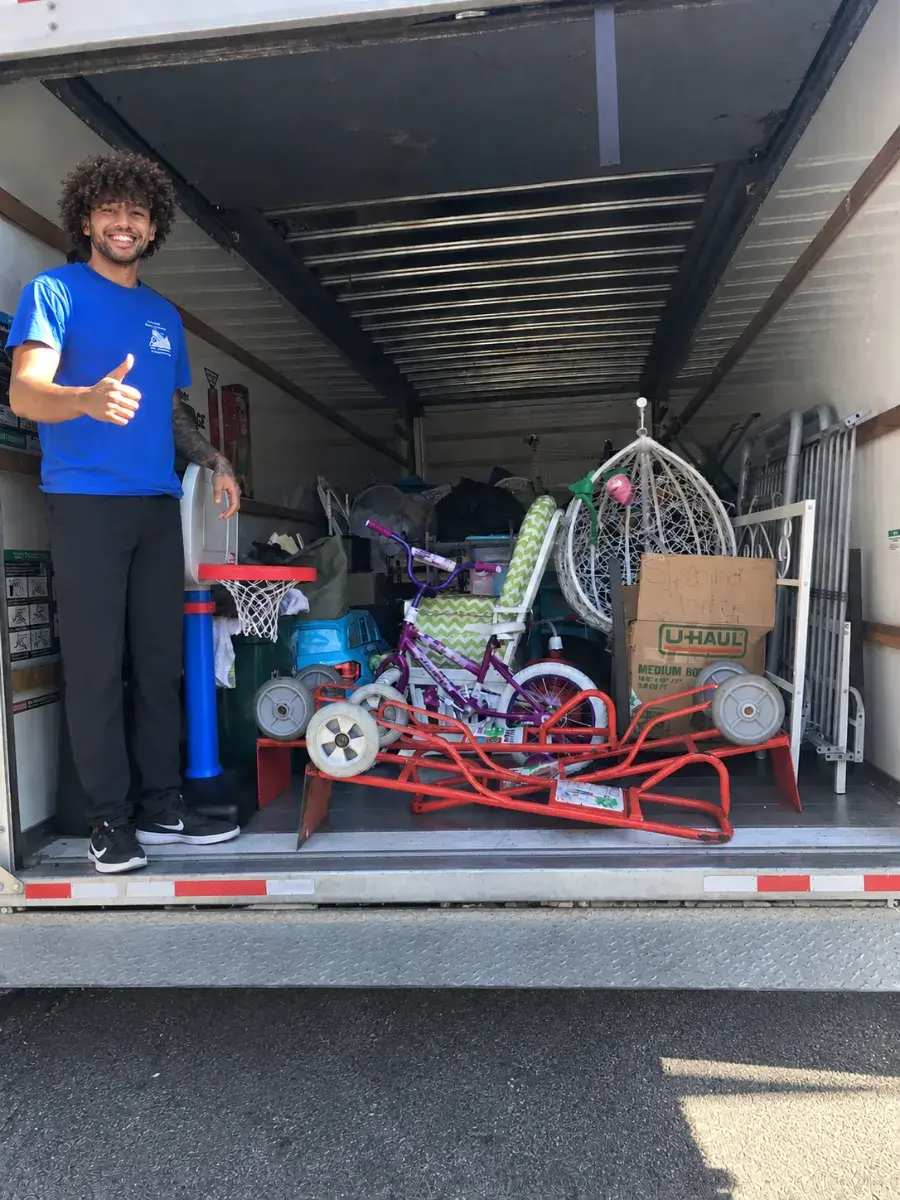
Usually the best value for local moves. You rent the truck yourself, and the movers only charge for the hours they spend loading and unloading. The crew brings dollies, blankets and straps, so the heavy, risky part is handled by pros. Truck loading help →
3. Moving container + labor-only help
PODS, U-Box and U-Pack work well when you need storage between homes or flexible timing. You pay the container company for the box and movers just for loading and unloading. Container loading →
4. Full-service movers
One booking covers the truck, crew and equipment. It costs more per hour than labor-only, but there’s no truck to rent, drive or return. Best when your time matters more than the savings. Full-service details →
What size truck should I rent?
A rough guide for local moves. When in doubt, go one size up: a second trip costs more than a bigger truck.
Rather not drive a truck at all? Our full-service crews bring one sized to your move. See full-service →
Want real numbers for your home? See your instant quote →
How to prepare for a local move, step by step
Follow these in order and moving day goes faster, which also keeps your bill lower.
Make a moving checklist
Write down everything to do before, during and after the move, with dates. One list keeps you on track and stops small tasks from slipping through the cracks.
Declutter before you pack
Go room by room and decide what to keep, sell, donate or throw out. Every item you don’t move is one less thing to pack, carry and unpack, and with hourly movers that saves money.
Book your movers and truck
Decide between labor-only help with your own rental truck or container, or full-service with our truck. Weekends and the end of the month fill up first, so book early. You can book online in about 4 minutes, even for the next day.
Reserve elevators, parking and HOA approval
Book your building’s freight elevator or loading dock, check your HOA’s moving rules, and get a street parking permit if you’re moving in DC. Do this for both your old and new place.
Schedule utilities and internet
Set a shutoff date at your old place and a start date at your new one for electric, gas, water and internet, so you have lights and Wi-Fi on day one and don’t pay for two homes.
Update your address
File a change of address with the post office, then update your bank, cards, employer, insurance and subscriptions so mail and bills follow you.
Get ready for moving day
Keep an essentials bag with you, clear hallways and walkways, point out fragile items and anything that isn’t going, and have someone at the new place to say where things go.
When should I start packing for a local move?
Start about 4 weeks before moving day for an apartment, and 6 weeks for a house. Spreading it out keeps packing from taking over your last few days. Here’s a simple timeline:
- Declutter: sell, donate or toss what you don’t want to move.
- Pack things you rarely use, like off-season clothes, books and decor.
- Label every box with its room and contents.
- Pack extras you won’t need soon, like spare linens and small appliances.
- Keep a simple list of what’s in each box.
- Take apart furniture you won’t use before the move, like guest beds and extra shelves.
- Pack most of the kitchen, closets and bathroom extras.
- Tape every box shut and double-check labels.
- Set aside a first-night box with toiletries, clothes, chargers and documents.
- Pack the last everyday items.
- Confirm your movers’ arrival time, plus any elevator, parking or HOA bookings.
- Keep spare boxes and tape on hand for last-minute items.
How to pack for a local move, step by step
Well-packed boxes load faster, and with hourly movers, faster means cheaper.
Gather your supplies
Get boxes in a few sizes, packing tape, markers and packing paper. Skip furniture blankets and plastic wrap for big pieces: we bring moving blankets and wrap furniture on the spot.
Start with what you use least
Pack off-season clothes, books, decor and storage items first, then work room by room. Leave everyday items for the last few days.
Match the box to the weight
Put books and other heavy things in small boxes, and light items like linens and pillows in big ones, so every box stays easy to lift and doesn’t break open.
Fill boxes all the way
Fill empty space with towels or paper, then tape boxes shut. Full boxes stack without crushing, and nothing shifts inside.
Wrap fragile items
Wrap dishes and glasses one at a time, stand plates on their edge, and write FRAGILE on the box so the crew handles it with extra care.
Empty dressers and drawers
Take clothes and loose items out of dressers, desks and nightstands. Full drawers make furniture too heavy to carry safely and can slide open. On heavy dressers we may take the drawers out and carry them separately.
Take apart what you can
Remove bed frames, table legs, shelves and mirrors from dressers. Put the screws and bolts in a zip bag and tape it to the piece. Rather not do it yourself? We take apart and reassemble furniture with our own tools at the same hourly rate.
Label two sides of every box
Write the room and a few key contents on the side and top, so the crew can put each box in the right room without asking.
Pack a first-night box last
Chargers, medicine, toiletries, a change of clothes, toilet paper and basic tools. Keep it with you, not in the truck.
What our customers say
5.0 stars from 24 Google reviews.
I called Andrew hoping to arrange a next-day move after another mover cancelled on us last minute. When he heard we already had a storage Pod in our driveway, he arranged to come the SAME DAY. He and his coworker were prompt, courteous, professional. and we could not have been happier with their work. And best part, they are able to come back in less Than a week to help move us into an apartment!
Hands down the best moving service I’ve experienced to date! Andrew was so responsive, courteous, professional, and he went above and beyond! They managed to fit everything into my UBox and I really appreciated their care. I will update this post once I get everything but for the moving and ubox delivery service, I rate them a 10/10
Great communication/fast response time, fast service, friendly and fair pricing. They were careful with all of my things and took extra care on how to place the items in the storage unit to make sure everything fit correctly. It’s was like watching a live version of Tetris! They did an awesome job. We will be using this company again!!!
Local moving questions
How long does a local move take?
It depends on how much you have, stairs and elevators, and how well things are packed. Our instant quote gives an hour estimate by home size and crew size.
When should I start packing for a local move?
About 4 weeks ahead for an apartment and 6 weeks for a house. Start with things you rarely use, and save everyday items for the last week. See the packing timeline →
How far ahead should I book local movers?
For weekends and the end of the month, a week or two ahead is safest. We often have next-day openings too, and you can book online in about 4 minutes.
What’s the difference between labor-only and full-service?
Labor-only means you handle the truck or container and we do the loading and unloading. Full-service means we bring the truck too. Compare both →
Do I need a permit for a moving truck?
In DC, yes: you need a public space permit to park a moving truck on the street. DC moving tips → In Fairfax County, rental trucks are allowed on residential streets within 48 hours of the rental contract, but HOAs and apartment buildings often have their own rules. Fairfax moving tips →
Is it cheaper to hire movers by the hour?
For local moves, usually yes. With hourly billing you only pay for the time worked, so good packing and a clear path directly lower your bill. We bill in 15-minute increments after a 2-hour minimum.
Ready to book your local move?
Pick your crew and time online. A $50 deposit holds your spot and goes toward your bill.